7 Nov,2025
Work-from-Home Posture Guide: Prevent Neck, Shoulder & Back Pain Naturally
Working from home has become the new normal—but so has the rise in neck, shoulder, and back pain. Long hours at a desk, makeshift workstations, and poor posture can silently take a toll on your body.
The good news? With a few simple adjustments and physiotherapy-backed strategies, you can work comfortably and stay pain-free.
Let’s explore how.
Why Work-From-Home Is Causing More Pain?
At home, people often work from sofas, beds, or dining tables without proper ergonomic support. Over time, this leads to:
- Slouched posture
- Forward head position
- Rounded shoulders
- Increased strain on the spine
These small issues can quickly turn into chronic discomfort if not addressed.
The Ideal Workstation Setup
Creating an ergonomic workspace is the first step toward preventing pain.
1. Chair Support
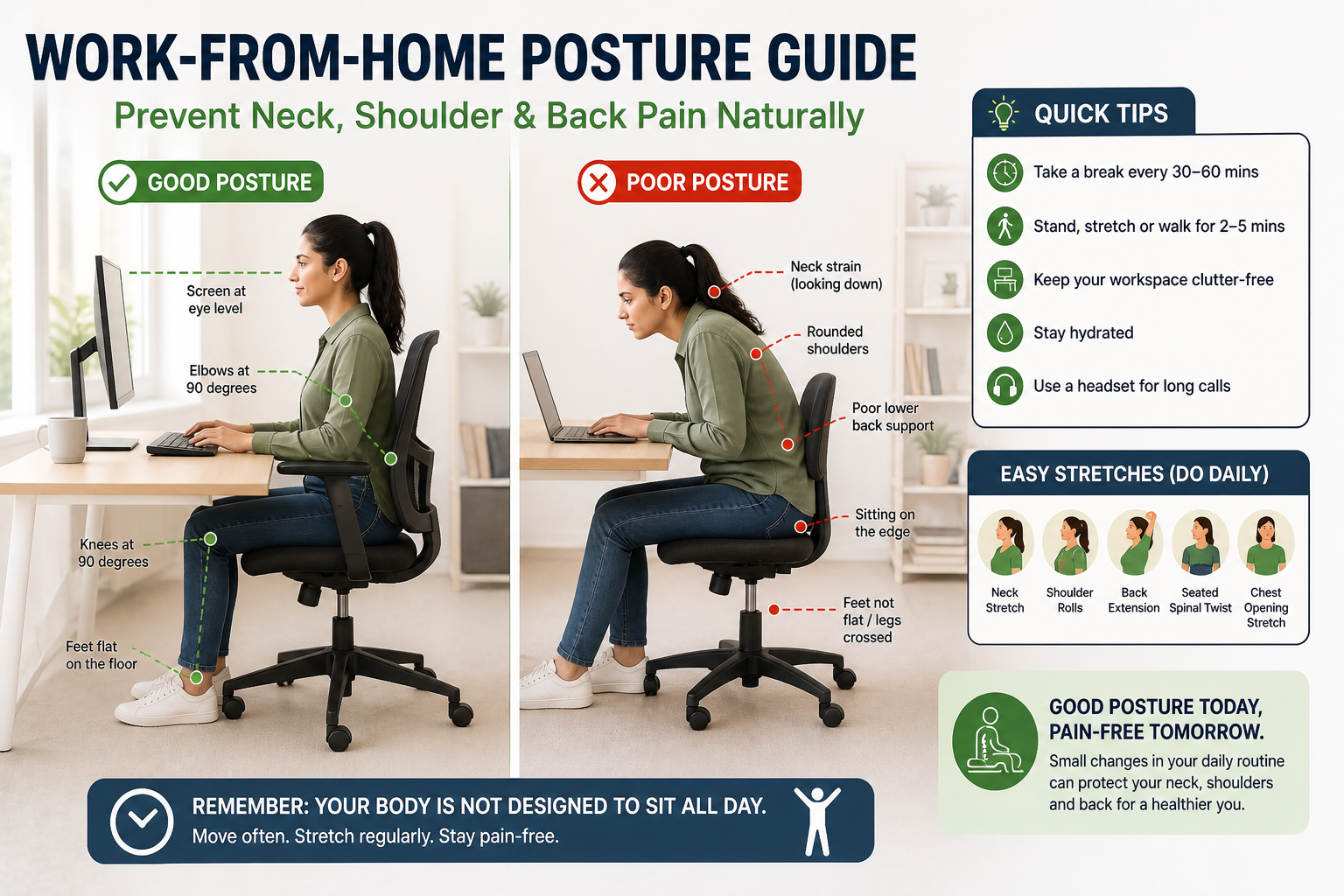
Use a chair that supports your lower back. Your hips should be pushed back, and your back should rest comfortably against the chair.
Tip: Place a small cushion or lumbar roll behind your lower back if needed.
2. Screen Position
Your screen should be at eye level, about an arm’s length away.
Avoid: Looking down at laptops for long periods—it strains your neck.
3. Keyboard & Mouse Placement
Keep them at elbow height so your arms form a 90-degree angle.
Tip: Your wrists should stay neutral—not bent up or down.
4. Feet Position
Keep your feet flat on the floor. Avoid crossing your legs for long durations.
Common Posture Mistakes to Avoid
- Slouching or leaning forward
- Sitting on the edge of your chair
- Tilting your head downward for long periods
- Working from bed or couch regularly
- Ignoring discomfort signals
Awareness is key—correcting these small habits can prevent bigger problems.
Simple Exercises to Stay Pain-Free
Even with perfect posture, staying in one position too long can cause stiffness. These exercises can help:
1. Neck Stretch
Gently tilt your head side to side and hold for 10–15 seconds.
2. Shoulder Rolls
Roll your shoulders backward and forward to release tension.
3. Back Extension Stretch
Stand up, place your hands on your lower back, and gently arch backward.
4. Seated Spinal Twist
Sit upright and twist your torso gently to each side.
5. Chest Opening Stretch
Clasp your hands behind your back and lift slightly to open your chest.
The 30–60 Minute Rule
Your body is not designed to sit for long periods.
Follow this rule:
- Take a break every 30–60 minutes
- Stand, stretch, or walk for 2–5 minutes
These small breaks improve blood flow and reduce stiffness.
How Physiotherapy Can Help?
If you’re already experiencing discomfort, physiotherapy can make a significant difference.
A physiotherapist can:
- Assess your posture and workstation setup
- Identify muscle imbalances
- Provide personalized exercises
- Offer manual therapy for pain relief
- Guide you on long-term prevention strategies
Bonus Tips for a Healthier Work Routine
- Stay hydrated throughout the day
- Use a headset for long calls instead of holding your phone
- Keep your laptop on a stand or use external accessories
- Maintain a consistent work schedule
- Stay physically active outside work hours
Final Thoughts
Working from home doesn’t have to mean living with pain. By improving your posture, setting up an ergonomic workspace, and staying active, you can protect your neck, shoulders, and back.
If pain persists, don’t ignore it. Early physiotherapy intervention can help you recover faster and prevent long-term issues.